 Hotline 24 hrs. 085-446-1188
 Email service@tlengineering.co.th
Hotline 24 hrs. 085-446-1188
Email service@tlengineering.co.th
Email service@tlengineering.co.th
Hotline 24 hrs. 085-446-1188
Email service@tlengineering.co.th
In 2026, elevator installations must strictly adhere to the Building Control Act.
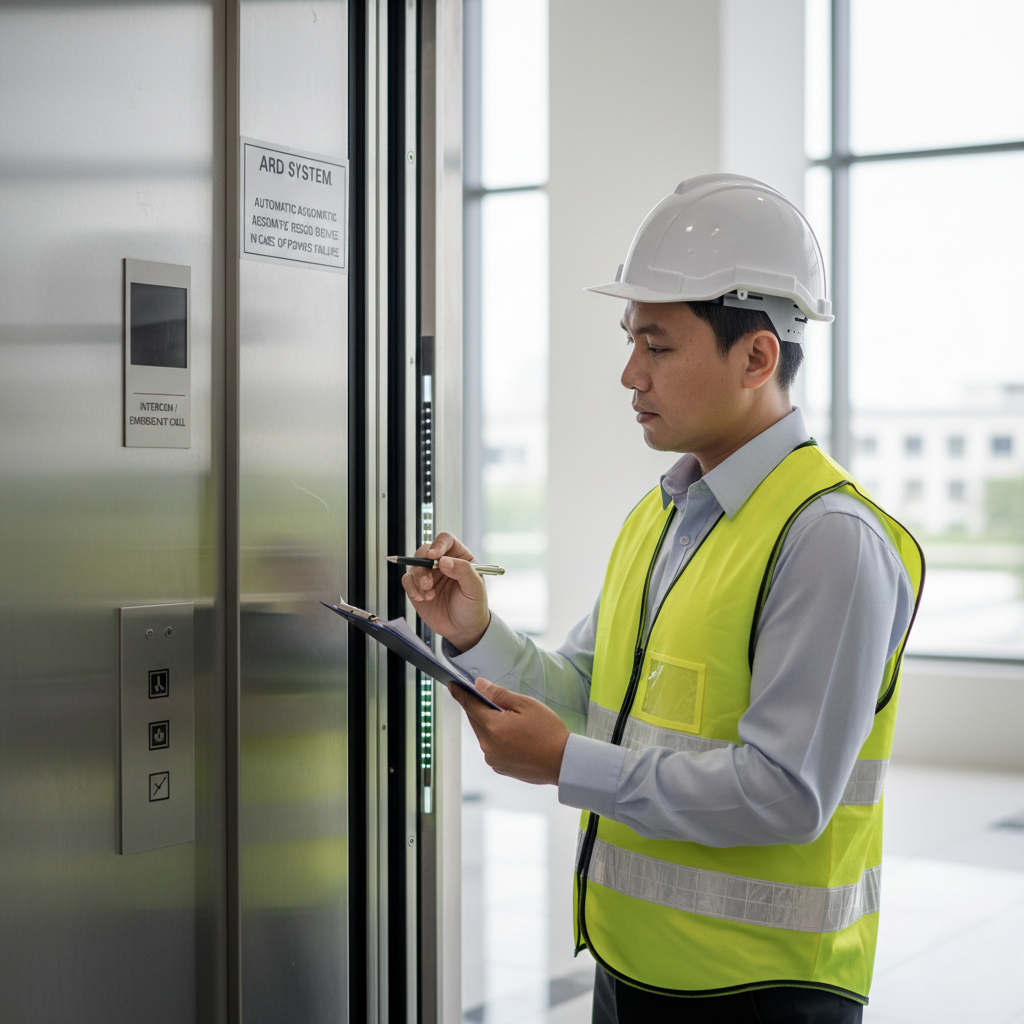
Mandatory Safety Systems: Every elevator must be equipped with an Automatic Rescue Device (ARD) to ensure passengers are not trapped during power outages.
Modifications: According to Ministerial Regulation No. 72 (2025), installing an elevator in an existing building (Retrofitting) requires a formal permit from local authorities if it involves structural alterations.
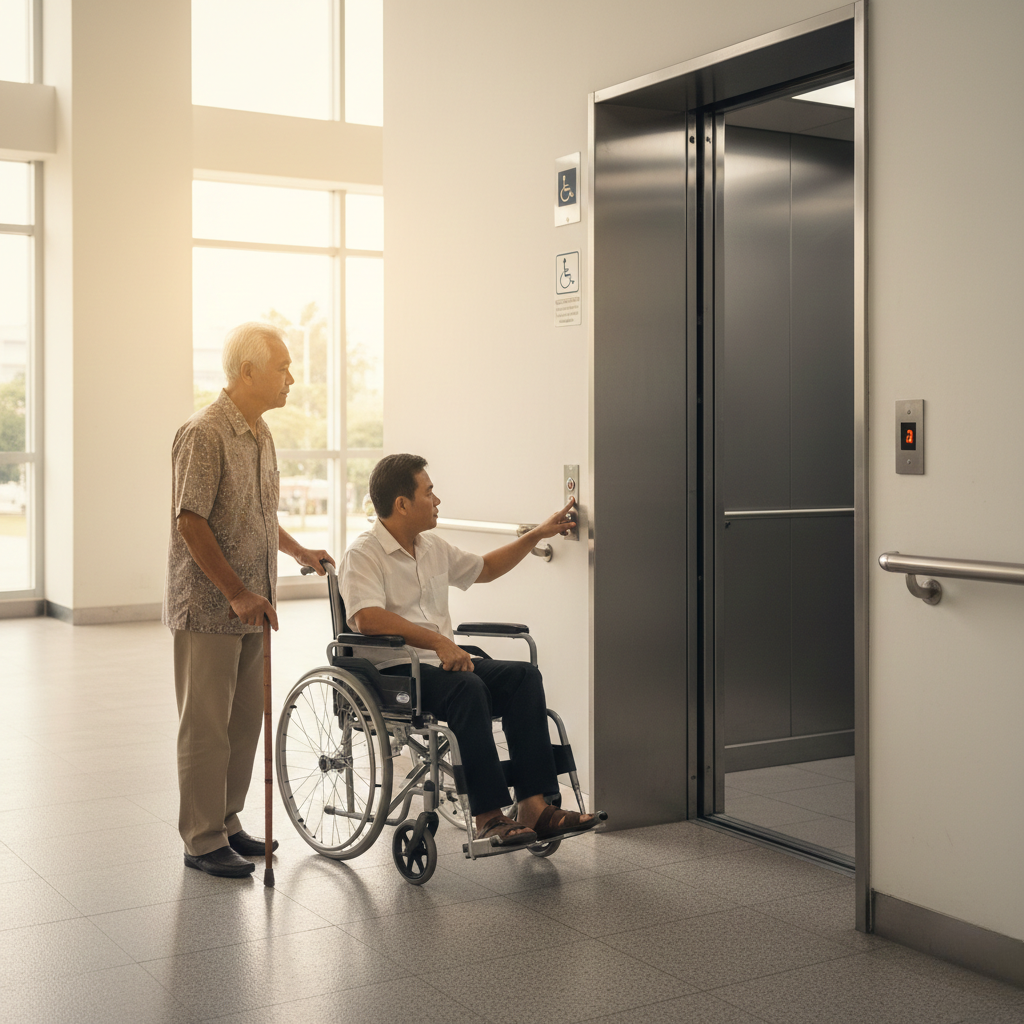
As Thailand moves towards an aging society, the Facilities for the Disabled and Elderly Regulation is crucial:
Control Panels: Buttons must include Braille and be positioned no higher than 1.20 meters from the floor.
Cabin Dimensions: For public buildings, a minimum width of 1.10m and depth of 1.40m is required to accommodate wheelchairs.
EN 81-20 / 50: The global benchmark for passenger elevators, focusing on mechanical strength and passenger safety.
EN 81-41: Specifically for Home Lifts. It regulates low-speed elevators (not exceeding 0.15 m/s) that do not require deep pits, making them ideal for residential use.
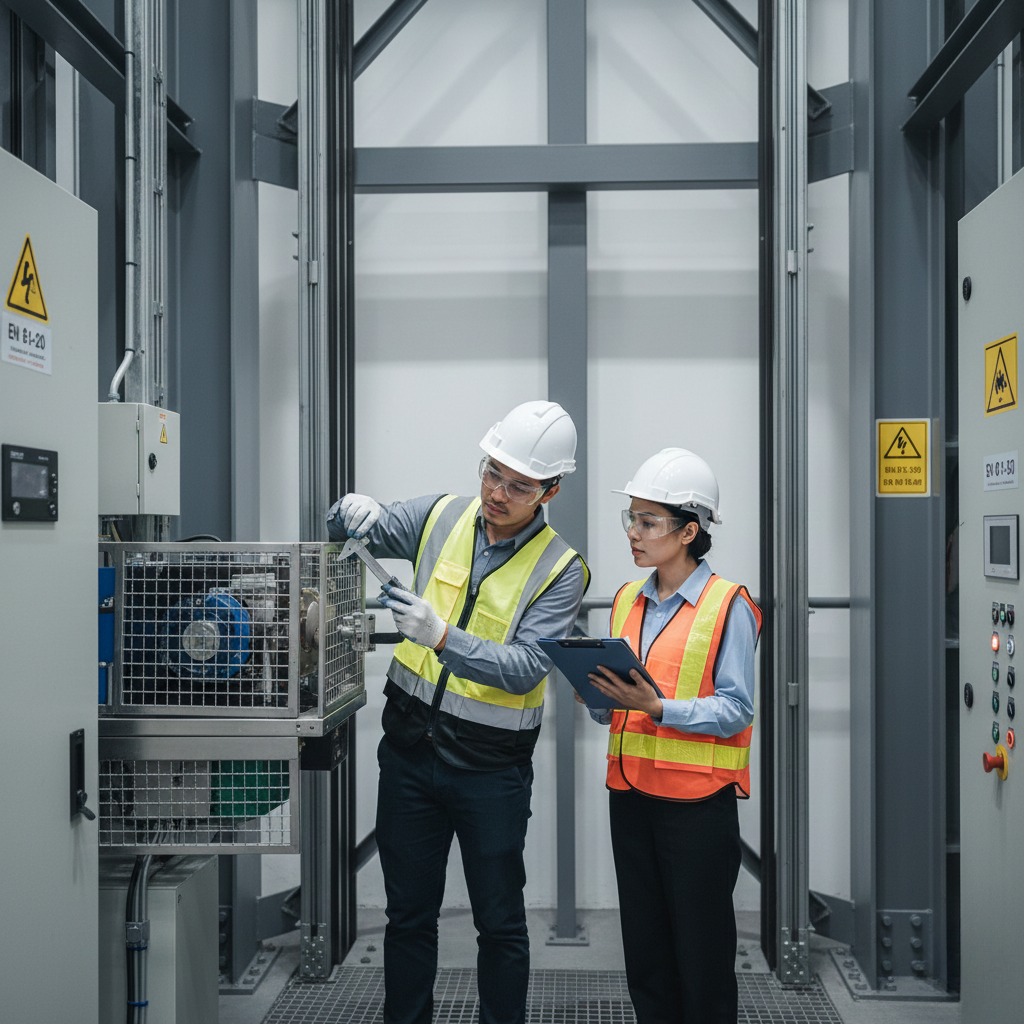
Annual Certification: By law, elevators must be inspected and certified by a Professional Engineer (PE) at least once a year.
Load Capacity: Maximum load signs must be clearly visible, and overload sensors are mandatory in all new models.
 - แก้ไขแล้ว.jpg)

Supply quality elevators and escalators that meet manufacturer standards. Comprehensive parts service for elevators and escalators, all parts quality meets standards. Staff are professionally trained with expertise, providing 24-hour service.
15, 17 Soi Rattanathibet 28 Yaek 2
Bang Kra So Subdistrict Mueang
Nonthaburi District Nonthaburi Province 11000
Be the first to receive our information, news,
promotions, discounts and activities
by simply entering your email.